
Most couples only see the finished gallery. They rarely think about everything that happens before those photos are delivered. A wedding photographer may spend ten or twelve hours shooting the event, but the work doesn’t stop when the last guest goes home. That’s why the question of photographer vs retoucher comes up so often. The truth is much simpler than many people expect: both professionals are responsible for different parts of the same result.
Table of Contents
Every great wedding photo starts with the photographer
A camera doesn’t make decisions – the photographer does.
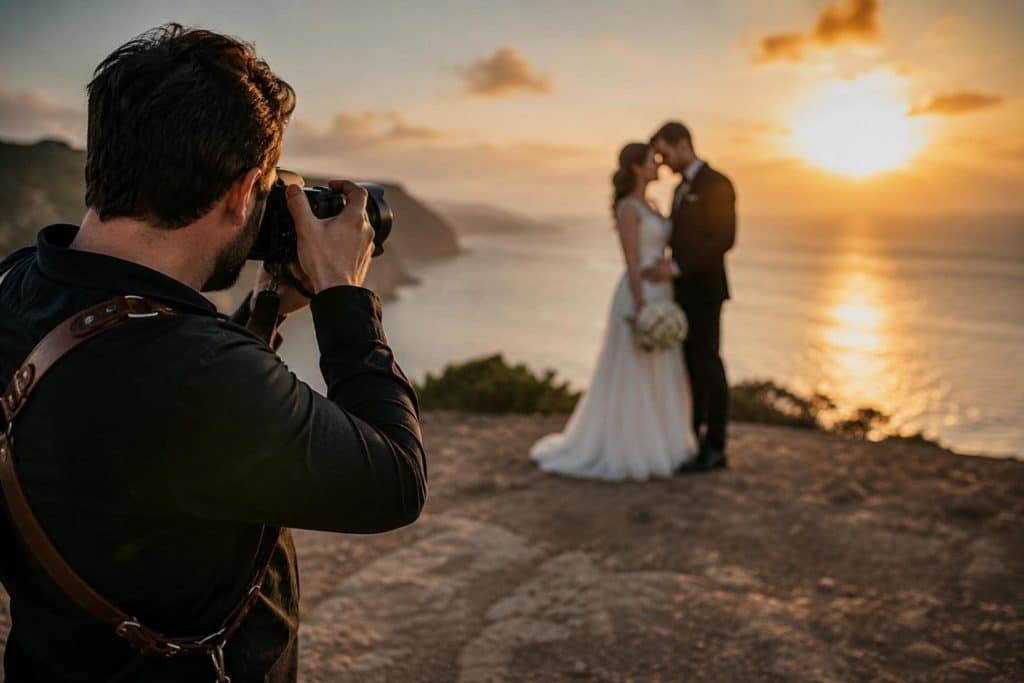
Throughout the wedding day they constantly adapt to changing situations. The ceremony may begin in bright sunshine, continue inside a dimly lit church, and finish under colorful dance floor lights. Every location requires different camera settings, different lenses, and sometimes a completely different approach to directing people.
Experience matters just as much. Knowing when to step back, when to give a little guidance, and when to press the shutter can’t be fixed later in Photoshop. If the moment wasn’t captured, no amount of editing will bring it back.
Understanding wedding photo editing responsibilities
Once the wedding is over, another part of the job begins. Couples usually receive a polished gallery, but they don’t see the hours spent behind the screen. Typical wedding photo editing responsibilities include:
- selecting the strongest photographs from thousands of RAW files;
- correcting exposure and white balance;
- matching colors between different locations and lighting conditions;
- removing temporary blemishes and distracting background details;
- preparing files for albums, prints, and online galleries.
Photographers are often asked who edits wedding photos. Some prefer to handle every stage themselves. Others work with a trusted retoucher who follows an established editing style so closely that clients never notice another specialist was involved.

Retouching isn’t about making people look different. It’s about making the whole gallery feel consistent. A portrait taken outside at sunset shouldn’t look completely unrelated to the first dance photographed under warm reception lights.
Photographer and retoucher roles are different but equally important
People sometimes treat photographer and retoucher roles as if one matters more than the other. In practice, they’re solving different problems, and neither can fully replace the other.
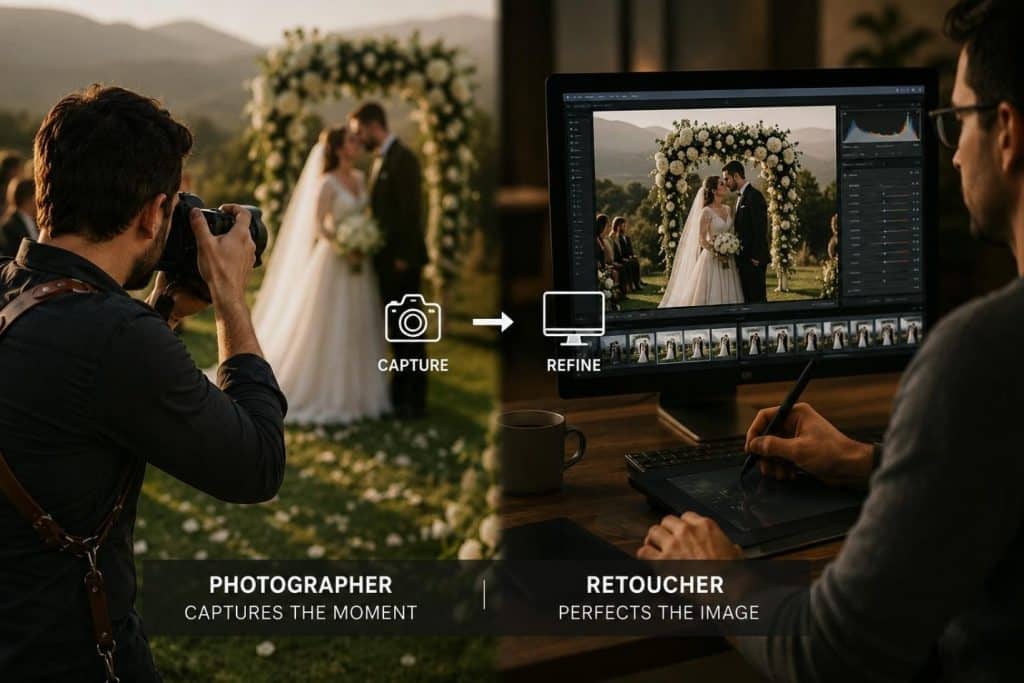
The photographer creates the image. The retoucher finishes it. One captures genuine moments as they happen, while the other makes sure those moments look their best without losing their authenticity.
For example, a couple may have the perfect portrait, but there’s a parked car in the background or an exit sign above their heads. Removing those distractions doesn’t change the memory. It simply helps people focus on what actually matters in the frame.

The same applies to color and lighting. Wedding photos are often taken in completely different environments throughout the day, yet the final gallery should still feel balanced and cohesive. Achieving that kind of consistency takes experience, attention to detail, and a good understanding of the photographer’s style rather than relying on automatic editing tools.
Why professional retoucher service often delivers better results
During peak wedding season photographers rarely have just one gallery waiting to be edited. They answer emails, meet future couples, prepare albums, travel, and spend entire weekends shooting. Finding enough time for detailed post-production becomes increasingly difficult.
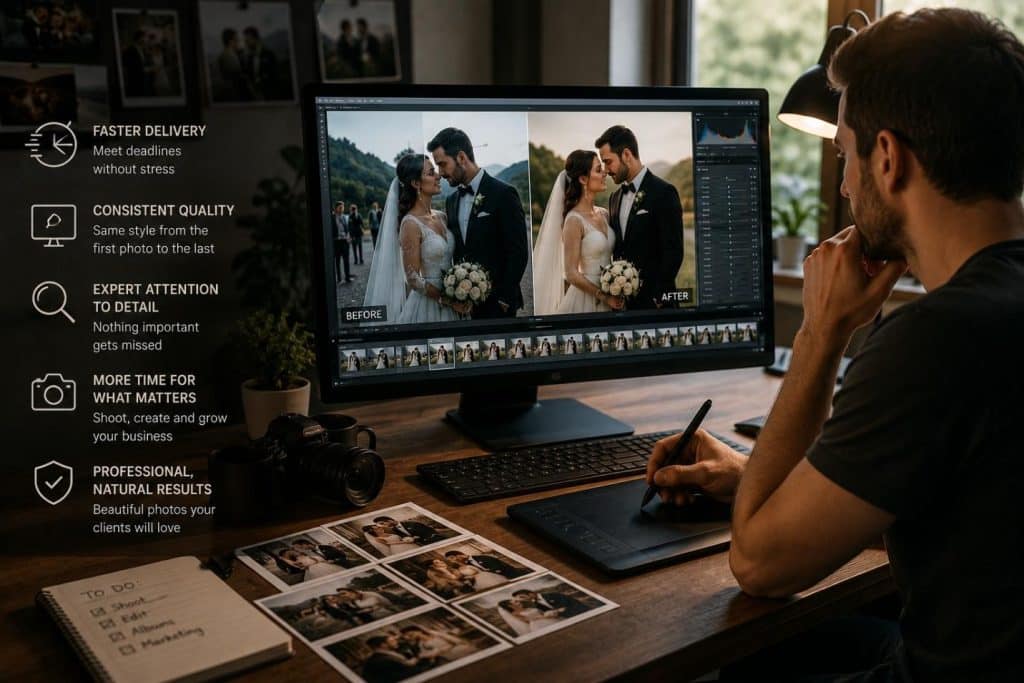
This is why many professionals rely on a Professional Retoucher Service. It helps them:
- deliver galleries faster;
- keep editing consistent from the first image to the last;
- avoid mistakes caused by long editing sessions;
- spend more time photographing instead of sitting behind a monitor;
- maintain the same editing style and quality, even during the busiest wedding season.
That’s also why perfect wedding photos editing isn’t simply about software or presets. It comes from a workflow where every stage receives the attention it deserves.
Many studios choose to work with SemMedia because their retouchers understand how to preserve a photographer’s personal style instead of replacing it with their own.

Final thoughts
Couples don’t remember how many hours were spent editing their gallery. They remember how those photographs make them feel years later.
That’s exactly why great wedding photography isn’t the work of one person. It starts with a photographer who knows how to capture real moments and ends with careful retouching that keeps those moments looking their best without feeling overprocessed.


