
Ask wedding photographers what separates the receptions that glow in every frame from the ones that need heavy editing, and the answer is unanimous: light. Not the flowers, not the linens, not the dress — light decides how all of those photograph and how the entire evening feels in the room. Yet lighting routinely receives the smallest slice of the decor budget, mostly because couples don’t know what to ask for. This guide covers what actually matters, what it costs, and how the glow of the wedding can follow a couple home.
Table of Contents
Why Light Outranks Every Other Decor Decision
Every element a couple chooses is experienced through the light that falls on it. A $4,000 floral installation under cold fluorescent ceiling panels reads as a grocery display; a $400 arrangement under warm, dimmed light reads as abundance. The mechanism is simple and worth knowing: warm light in the 2200K–2700K range — the color of candle flame and golden hour — flatters skin tones, softens edges, and signals celebration to the brain, while the cool white light most venues install for cleaning crews does the opposite. Photographers price this reality into their work: venues with warm, layered light need less flash, which means more natural candids and fewer of the harsh, deer-in-headlights frames that flash produces on a dance floor.
The Three Lighting Moments of a Wedding Day
A wedding is not one lighting problem but three, and each has its own playbook. The infographic below is the version to screenshot and hand to the venue coordinator:

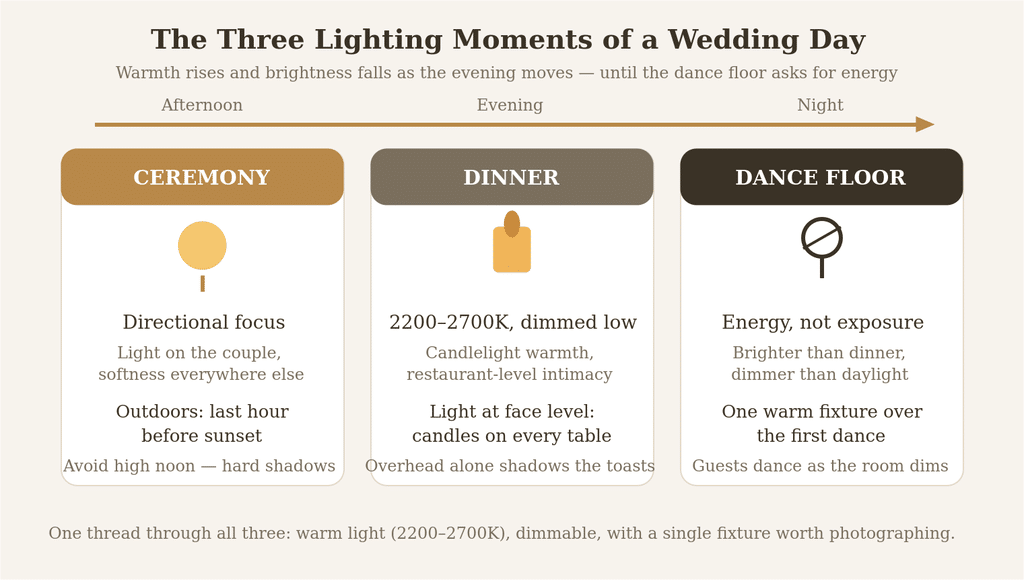
- The ceremony wants directional focus — light on the couple, softness everywhere else. Outdoors, this means scheduling around the sun: the hour before sunset delivers the light every photographer requests, while high noon produces squinting and hard shadows no editing removes. Indoors, it means aiming existing spots or uplights at the altar area and turning everything else down.
- Dinner wants warmth and intimacy — the restaurant standard of 2200K–2700K, dimmed low, with candles or small table lamps putting light at face level where conversation happens. Overhead light alone, however warm, leaves faces in shadow at exactly the moment toasts are being filmed.
- The dance floor wants energy and permission — brighter than dinner, with movement or color if the couple wants it, but never so bright that guests feel watched. The oldest rule in event design applies: people dance in proportion to how dim the room is.
The Chandelier Moment
If the past decade of weddings has produced one defining lighting image, it is the chandelier hung where no chandelier belongs: inside a sailcloth tent, from a barn beam, over a dance floor under the open sky, or suspended above the sweetheart table. The appeal is the contrast — a formal object in a rustic or open-air setting — and the function: a chandelier gives an open space a center, exactly what tents and barns lack by nature. It also gives photographers an anchor; the couple’s first dance under a single warm fixture is among the most requested shots in wedding photography precisely because the light source is in the frame, not just lighting it.
Couples pursue the look three ways: venue-supplied fixtures (increasingly common in barn and estate venues — ask before renting elsewhere), rental from event lighting companies, or purchase. Purchase surprises people by often beating rental on price for smaller fixtures — and unlike a rental, the fixture comes home afterward as the most meaningful decor object a couple can own: the light they married under, hanging over their dining table for the decades that follow. Couples planning this route typically browse the same chandelier collections designed for homes, since a fixture chosen to live in the couple’s future dining room or entryway does double duty, and home collections offer far more range than event inventories.

What Wedding Lighting Actually Costs
| Option | Typical Cost (US) | What It Covers |
| Candles + mirrors (DIY) | $150–$500 | Table-level warmth; verify venue’s open-flame policy |
| String / bistro light rental | $300–$1,500 | Canopy warmth for tents, patios, barns |
| Uplighting package (10–20 units) | $400–$1,200 | Wall wash in any warm tone; changes the whole room |
| Chandelier rental (each, installed) | $150–$600 | One statement point; rigging included |
| Chandelier purchase | $200–$1,500 | The statement point, kept for the couple’s home |
| Full professional design | $2,000–$8,000+ | Everything above, plus dance floor and pin-spotting |
The highest-return line for most budgets is uplighting plus one statement fixture: together they change how the entire room and every photo reads, for less than most floral centerpiece budgets.
Questions to Ask Every Venue Before Booking
Lighting problems are cheapest to solve before the contract is signed. Five questions that reveal everything: Can the overhead lights dim, and who controls them during the event? What color temperature are the installed bulbs — and if the answer is a blank look, ask to visit at night. Are open flames allowed, or LED candles only? Is there rigging access and a weight allowance for hanging fixtures, and does the venue require their own riggers? And what does the space look like after dark — because a venue toured at 2 PM in June is a different room at 8 PM in any season, and the after-dark version is the one in the photos.
Bringing the Glow Home
The reason wedding light feels different is not budget — it is intention: warmth, dimmers, layers, and one fixture worth looking at. Every one of those elements transfers directly to a couple’s first home, usually for less than a single reception decor category. Warm 2700K bulbs throughout, dimmers in the dining and living rooms, candles that survived the reception, and the chandelier — rented once and bought properly, or carried straight from the tent to the dining room ceiling. Newlyweds who light their home this way describe the same effect guests described at the wedding: rooms that feel like an occasion. Some couples now put the fixture itself on their registry for exactly this reason; it is one of the few registry items used every single day and photographed at every holiday hosted afterward.

The Light Is the Memory
Years later, no one remembers the napkin fold. What survives — in memory and in every photograph — is the glow: golden ceremony light, candlelit dinner, a warm fixture over the first dance. Lighting is the rare wedding decision that is simultaneously the most photographed, one of the least expensive to get right, and the only one a couple can take home and live under. Plan it with the same care as the flowers, and the wedding keeps paying that care back every evening the lights dim in the couple’s own dining room.


