
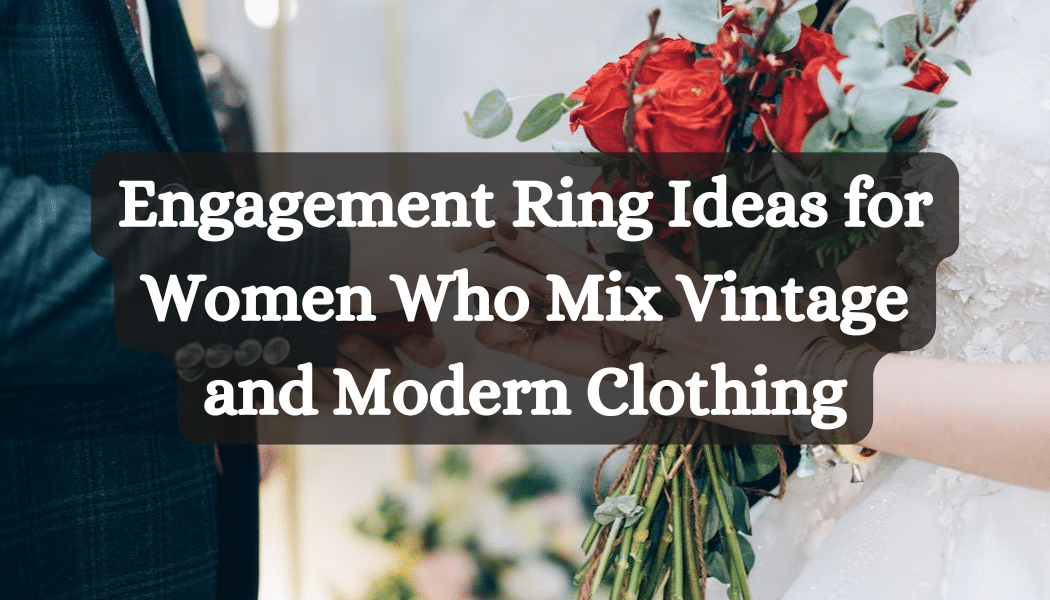
Picture a closet where a 1970s silk blouse hangs next to a sharp modern blazer, and a beaded evening bag from a thrift store sits beside sleek leather boots. The woman who dresses this way treats eras as a palette rather than a rule, pulling one piece from the past and one from the present into a single outfit. Her engagement ring faces the same test every morning. A ring that belongs only to one period will clash with half of what she owns, so the goal is a ring that does what her wardrobe does, looking old and new at the same time.
It comes down to one idea. Pick a design with a foot in each era, then keep the execution clean enough to sit under a vintage sleeve or beside a contemporary cuff without looking out of place. That usually means a shape with real history and a setting with a modern line, plus detailing that nods to the past without turning the ring into a costume piece.
Table of Contents
A Shape for Both Eras
The stone shape matters most for bridging the eras, and few shapes cross periods as easily as the pear. A pear shaped engagement ring combines the rounded base of a brilliant cut with the single point of a marquise, a form that has stayed in production since long before Art Deco. That long record is exactly why it suits a mixed-era wardrobe. The shape looks antique when set with milgrain and filigree, and current when dropped into a bare bezel, so the same stone can lean either direction depending on the setting around it.
The pear also flatters the hand in a practical sense. Its elongated outline lengthens the finger and gives a modest carat weight more presence, which matters for a woman who wears the ring against both structured tailoring and loose vintage fabrics. A shape with this much range removes the pressure to match the ring to a single look.
Old Detailing on a Clean Setting
The most reliable way to build an old-and-new ring is to put vintage detailing on a modern frame. Milgrain, the fine beaded edge found on antique jewelry, and filigree, the openwork metal patterns of the early 1900s, both give a strong period signal. Placed on a low bezel or an east-west setting, where the stone lies horizontally across the finger, that antique detail works as a deliberate reference rather than a full costume.
The reverse works too. A plain, modern solitaire gains vintage character from a single old touch, such as a hand-engraved band or a milgrain rim, without committing to a full antique look. Restraint decides it. One or two period cues bridge the eras, while a ring loaded with every antique flourish belongs firmly to the past and loses the modern half of the wardrobe.
Mixed Metals and Two-Tone Settings
A woman who layers a gold vintage chain over a modern silver piece already mixes metals, and her ring can echo that habit. A two-tone setting, yellow gold for the band and white metal around the stone, matches warm antique jewelry and cool contemporary pieces alike. It solves the common problem of a single-metal ring that suits half a jewelry box and fights the other half.
Rose gold plays a similar role. It has a vintage warmth while staying popular in current design, so it works comfortably between a Victorian brooch and a minimalist watch. A metal that stays between warm and cool keeps the rest of an outfit free to go either way.
What to Leave Out
Some choices pull a ring too far toward one era. A faithful reproduction of a specific antique style, heavy Edwardian lace work or a full Art Deco panel, looks striking on its own but pins the ring to a single period and a single kind of outfit. The same trap appears at the modern end, where an of-the-moment sculptural setting can date within a few years and leave the vintage side of the wardrobe unsupported.

The safer path stays in the middle. A ring that references the past through one or two details, set on a shape and a mount that current design still uses, will pair with a flapper-style dress and a tailored suit alike. All of this serves flexibility, since the wardrobe it dresses refuses to commit to one decade.
Matching the Ring to Her Actual Style
Beyond shape and metal, the ring should match how she really dresses. A woman who leans toward bold vintage prints and statement pieces can wear a larger stone and more visible detail, because the ring competes with a busy wardrobe. A woman who mixes eras through quiet, neutral pieces is better served by a cleaner ring that looks considered.
Color helps here as well. If her vintage finds run warm, with browns, creams, and gold tones, a warm metal and perhaps a colored accent stone will feel native to her closet. If she balances eras through a neutral palette, a white metal and a plain diamond hold that restraint. The ring is one more piece in a wardrobe built on deliberate contrast, and it works best when chosen with that contrast in mind.
Living With the Ring
A ring meant for daily wear across many different outfits needs to hold up to that variety. A pear or another elongated stone belongs in a setting that protects its point, since the tip is the part most likely to chip. Bezels and well-made prongs both guard the stone while keeping the low profile that slides under a sleeve.
Antique-style detailing also asks for a small amount of upkeep. Milgrain and engraving trap grime and soften without a periodic clean, a minor chore that takes nothing from the look. For the least upkeep, a bezel-set pear with a single engraved band delivers the old-and-new effect and stands up to daily wear.
The woman who mixes vintage and modern clothing wants a ring that keeps up with all of her outfits, the way her best accessories already do. Get the shape, the setting, and one honest nod to the past right, and the ring looks equally at home against a silk blouse from another decade and the sharp blazer hanging beside it.


