
Two of life’s biggest milestones, finding the perfect home and a soulmate to share it with, are getting harder and harder to reach as time goes on.
The average wedding is likely to set the blushing bride and dashing groom back around $34,000, a mere drop in the bucket compared to a median house price that exceeds $400,000 and keeps on growing.
Though these figures might seem terrifying, don’t fret, as your happily-ever-after is still very achievable. Some would say skip the celebration and save for a down payment, but any couple looking to tie the knot knows that their wedding is more than just a party with a buffet. It’s a tough balancing act for sure; they’re both goals worth saving for, and the good news is that with the right planning and a willingness to compromise in certain areas, you might not have to sacrifice one for the other.
Let’s dive into where and how America’s newlyweds accumulate expenses, and how you can avoid those pitfalls to navigate the real estate market with more bargaining power once you’re done with the honeymoon.
Why weddings get so expensive
How much people typically spend on their wedding depends on their budget. If you have 15-40k, you’re likely going to end up throwing around $26,000, for example. The most expensive elements tend to be:
- Location – with destination weddings racking up the highest price tag
- Size – The more guests, the more you need to accommodate
- Season – May through October sees the highest demand
It’s tough to put an overall price on any of these components, as weddings are incredibly personalized and, on average, parents foot between 35-40% of the bill. Interestingly, the majority of that normally comes from the bride’s family, and they say dowries are a thing of the past…
So how do you square hosting an event you can be proud of, without decimating your finances and chances of owning your dream home in the future?

Important considerations when you start saving
Dream first, then start refining
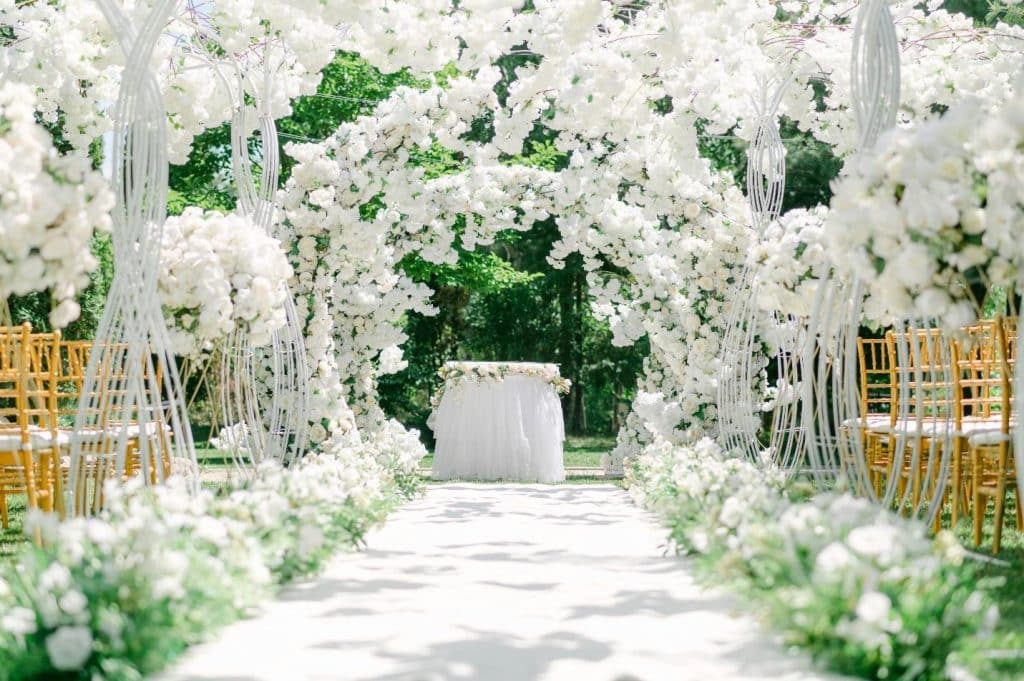
The first step to any modern wedding is, of course, a vision board. Go as big as you want in this initial phase; you’ll find it fun and cathartic to dream up lifesize flower sculptures of yourselves and your dogs, but with the prospect of homeownership in your mind, you’ll quickly start realizing what is out of range, and what matters most.
Intimacy has become a defining trend in weddings over the past few years, partly because budget constraints have hit us all, and partly because they’re cozy and much easier to plan. You should also start a similar board for what you want in your dream home, as having a sense of the size and scale of both will help you balance expectations against the reality of costs.
Thinking about your life after the wedding puts things into perspective. If you see yourselves as a happy couple living it up in a city condo or chilling in the suburbs, that will influence how you approach your budget for the big day.
Draw up a budget that leaves room for the future
Much like a vacation, there’s a sense of frivolity when it comes to spending on a wedding. Yes, it’s the most important day of your life, but what actually makes it so, and where can you save money in a way that doesn’t impact the magic of the moment?

Separate your must-haves and your would-be-nice elements. When it comes to the dress, a major investment in most weddings, ask yourself:
- Does it have to be brand new? Or can it be rented?
- Do you know anyone who can personalize a cheaper dress to make it exceptional?
Similar compromises can be made for the venue and the guest list, which are usually intertwined. You might opt for a location where everyone has to travel the same distance, rather than leaving some attendees to navigate across the country/world to Mississauga while the rest face only a 5-minute walk. Truthfully, local weddings are less expensive overall, and some friends or extended family not being able to make it cuts your spending even further. It’s not ideal, but these are the kinds of compromises that make post-wedding life easier to manage. Every dollar you save now goes towards your future down payment!
Don’t get caught out by the hidden costs of starting a life together
It’s easy to get fixated on concrete numbers and dates, but real estate has a way of catching you off guard. Remember, it’s not just a deposit you’re saving for, as moving costs, emergency funds, furniture, and potential renovations all add up.
Above all else, you should strive for flexibility in your approach. Starting a joint savings account and deciding on where you want to settle before you commit to any costly wedding-related investments is a great idea, because you’ll at least have a goal range to aim for. If you’re looking to lay down roots somewhere warmer along the Sun Belt, competitive markets are easier to navigate with local experts like a Northern Virginia realtor.

Balancing your dreams
Your wedding is just the start of a new chapter in your story. What comes next is where the real journey begins: a chance for you and your lawfully wedded partner to navigate life’s complexities and solve problems with love, compassion, and a heck of a lot of teamwork.
Whether you choose to celebrate big or scale back in hopes of buying sooner, your wedding day will still be magical. Those promises you make to one another will still echo forward and fill your heart for decades to come, regardless of how extravagant the ceremony was and where you live when you next hear them.


